Agencies get asked this by clients constantly. A dentist wants to know if renaming to something like "Riverside Dental" instead of "Riverside Smiles" will move their rank.
Most answers online split into two camps: "yes, always" from SEO folklore, or "no, Google penalizes keyword stuffing." Neither camp has real data behind it.
So we pulled the data. Across 3,388 dental markets, practices with a dental term in their business name carry a real, measurable rank advantage over same-market rivals without one.
The numbers below come from Grid My Business's own production grid-scan data, not a survey or a third-party estimate.
But the data can't answer the question agencies get asked, which is whether an established practice should rename to get it.
Add "Dental" to Your Name and Rank Higher
A dental term in the business name (dental, dentist, smile, and similar) carries a median advantage of 2.25 positions over same-market rivals without one, comparing businesses within the same local market and the same scan. That's the strongest single-attribute effect in the entire dataset.
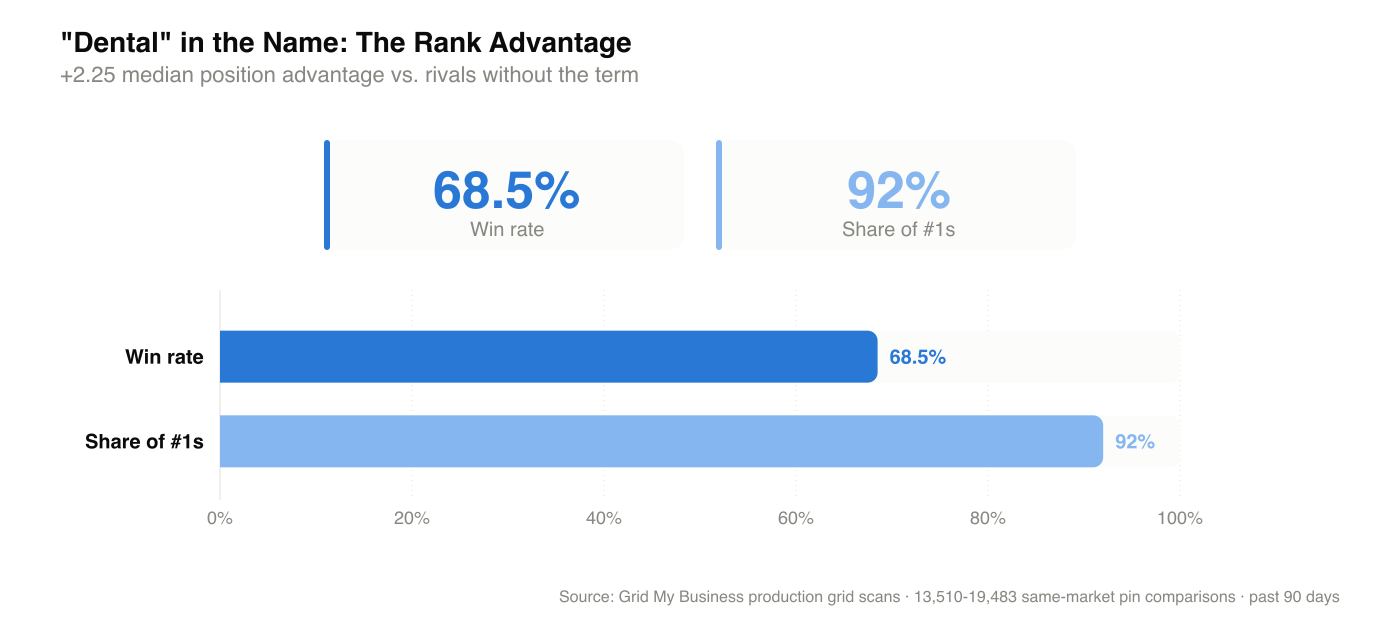
It beats every other attribute measured: a website adds +1.76 positions, the right primary category adds +0.94.
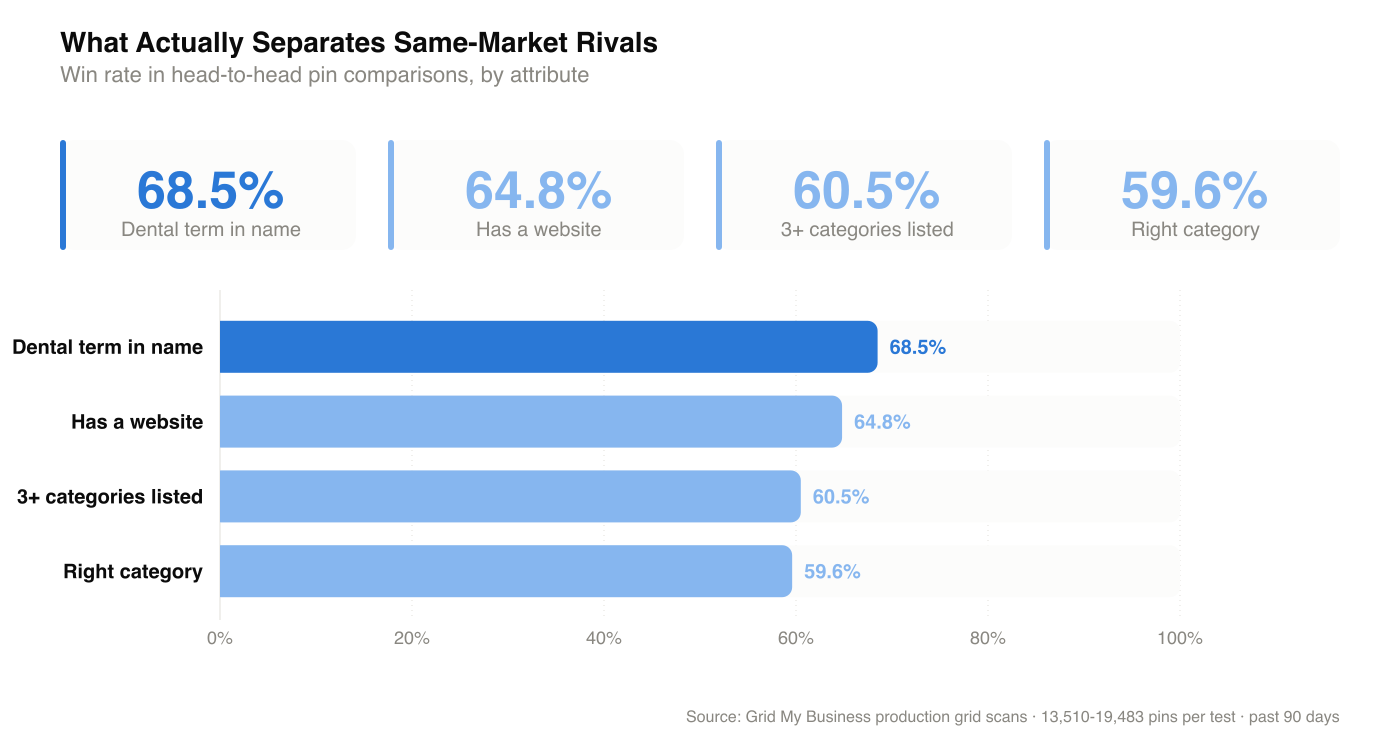
Methodology: 13,510 to 19,483 same-market pin comparisons over the past 90 days. Matching within a market removes market-level differences in competition and demand. It does not remove business-level differences like size or review count, which is why the next section covers what this data can't separate.
What This Data Can't Tell You
Even a same-market comparison this clean is consistent with three different explanations, and the aggregate data can't distinguish between them:
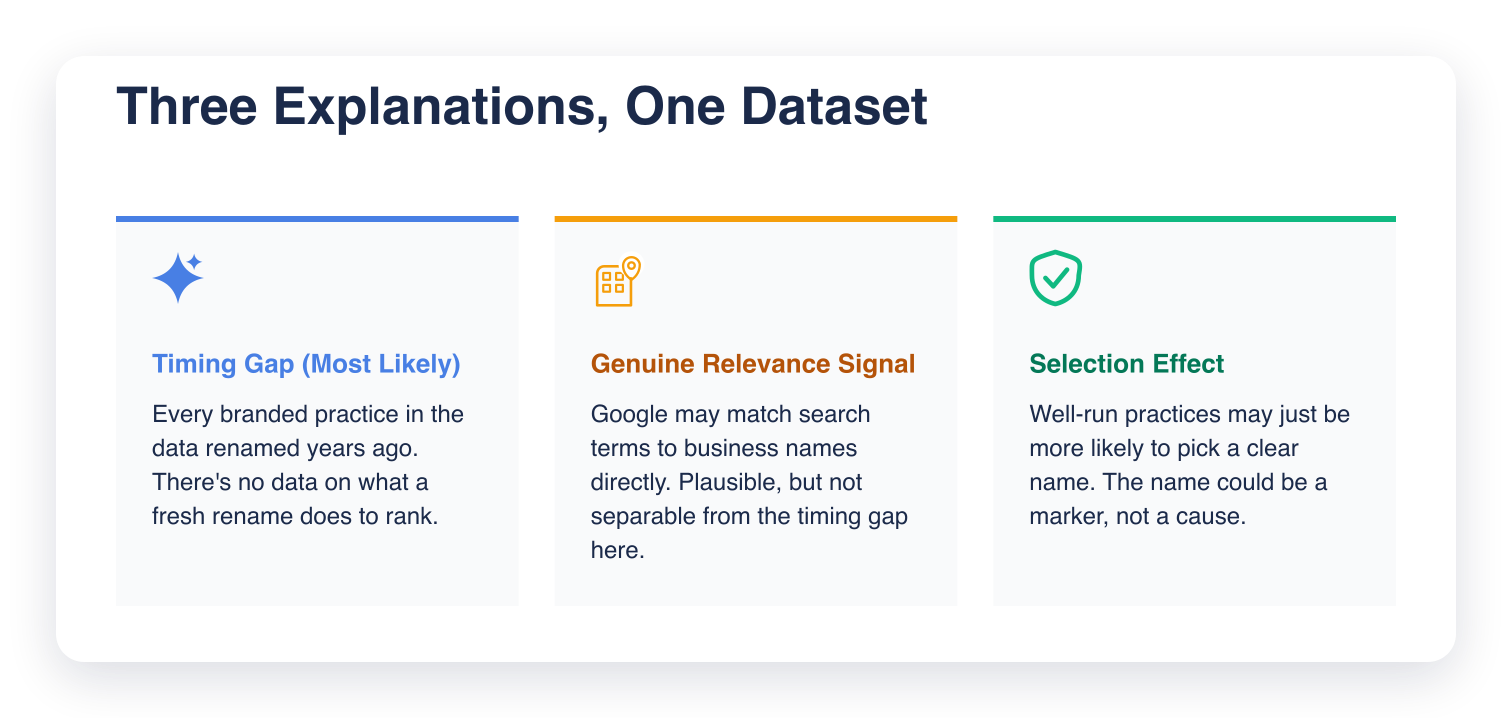
The most likely explanation is the timing gap: every dental-branded practice in this dataset has carried that name for years, built citations, reviews, and local recognition around it. None of them are a business that just renamed last month, and we have no data on what happens to a practice's rank in the months after a rename, because renaming isn't something practices do often enough to sample. That's the actual advice question, and this dataset can't answer it.
The other two explanations are plausible but harder to separate from that timing gap. Google matching search terms to business names is a well-documented mechanic, so if that's what's driving the effect, it's a real, causal one. It's also possible this is a selection effect: practices that already invest in clear naming and visibility tend to also do other things right, and the name may simply mark a well-run practice rather than cause its rank.
What to Tell a Client
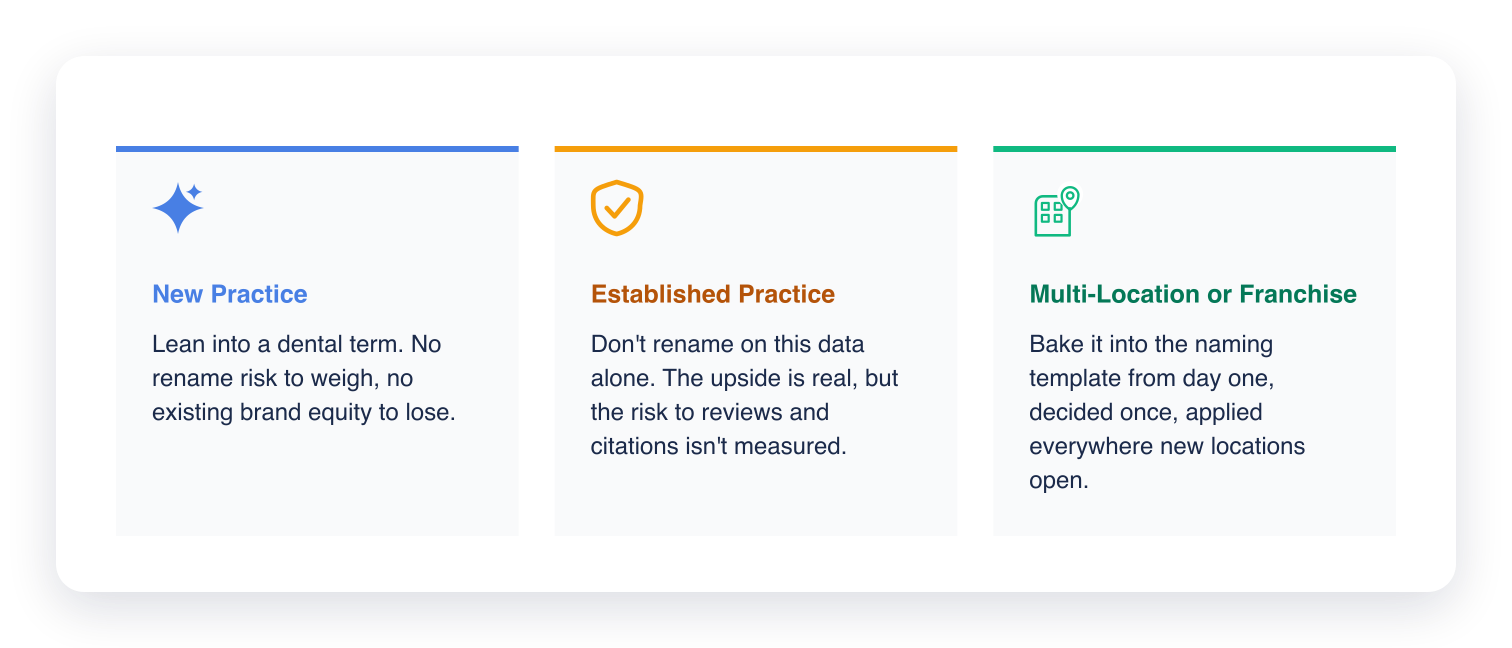
The right advice depends on where a practice already stands: opening fresh, already established under a different name, or scaling across multiple locations.
Choosing a Name for a New Practice
The data supports leaning toward a name that includes a clear dental or dentist term. There's no rename risk to weigh against, since there's no existing brand equity to lose.
An Established Practice With Brand Equity in Its Current Name
Don't rename on this data alone. The 2.25-position upside is real, but it's an average pulled from practices that have carried a dental-branded name for years. A rename risks review continuity, citation consistency, and existing brand recognition, none of which this dataset measures, and none of which come back quickly if a rename goes wrong.
A Multi-Location or Franchise-Style Practice
This is where the finding is most actionable, since naming convention gets decided once and applied everywhere new locations open. Including a dental term in the naming template from the start avoids the tradeoff entirely.
One Caveat
This is one attribute, measured cleanly, inside one dataset. It is not permission to keyword-stuff a business name past what a practice would naturally be called. Google's own guidelines for representing a business on Google state that a name "must reflect your business's real-world name" and that including unnecessary information, like a tagline or a descriptor added to chase relevance, isn't permitted and could result in the profile getting suspended. That's a real cost this data doesn't measure.
If you're naming a practice today, a clear dental term helps and costs nothing. If you're renaming one that already has a name, you are trading a measured average for risks this data does not measure. That is the practice's call.
See Where Your Own Practice Ranks
If you're weighing this for a real practice, the same kind of grid-scan data behind this analysis is available for your own listing. Grid My Business shows exactly where a practice ranks against same-market competitors, name, category, and reviews included, so you can see the current position before deciding.
Frequently Asked Questions (FAQs)
Q: Does adding "dental" to a practice's name guarantee a rank improvement?
A: No. It's a measured correlation across thousands of same-market comparisons, not a guarantee for any individual practice. Other factors, especially proximity to the searcher, matter more.
Q: Should a brand-new dental practice pick a name with "dental" in it?
A: Yes, this is the clearest case in the data. A new practice has no existing name or brand equity to protect, so there's no rename risk to weigh against the advantage, just a name choice made once at the start.
Q: Should an established dental practice rename to include a dental term?
A: Not on this data alone. The advantage is real, but the dataset only captures practices that have carried a dental-branded name for years. There's no data on what a rename does to an established practice's rank, reviews, or citations in the months after.
Q: Is this the same as keyword stuffing?
A: Not as measured here, since the comparison is presence of a natural dental term, not an artificially long or stuffed name. But a name that reads as an obvious ranking play carries its own risk that this dataset doesn't measure.
Q: What matters more than the business name?
A: Proximity to the searcher. It's the dominant factor in this dataset by a wide margin, and it sets the ceiling on what any other attribute, including the business name, can do.